Friday, February 17, 2023

Blind Spot


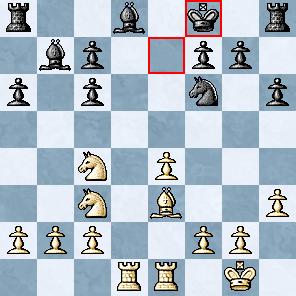
I've been staring at this mate in 3 puzzle and I can't see the solution!

  • h2+ Kh1 Qxf2 Nxg4 and there's no mate
  • hxg2 Kxg2 Rh2+ Kg1 and there's no mate
  • Qf4 Nxg4
  • Nxe5 Bxe5
  • Qe4 Bf3
  • etc

Ten minutes later...
Oh, Qxf2+ looks good.
Rxf2 (otherwise Qxg2#) h2+ 
  • Kh1 Nxf2#
  • or Kf1 h1=Q#


Sunday, July 19, 2020

Calculation Practice


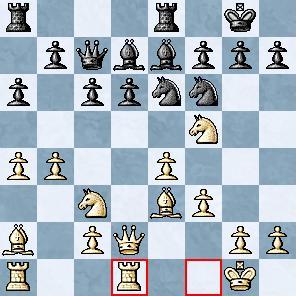
White to play

Is 1. Qh5 (intending 1...hxg5 2. Qf7#) any good?

Answer:
No! After 1. Qh5, Black has 1...Qg3+. Always look at opponent's forcing moves. Instead, White should play 1. Qf2, and if 1...Bg6, then 2. Qf7+ anyway 2...Bxf7 3. exf7#

Sunday, December 17, 2017

Giving a Rook with Check

Here is a 3-minute blitz game that I just played on Chess.com. I was White.

1. e4 c5 2. d4 cxd4 3. c3 dxc3 4. Nxc3 Nc6 5. Nf3 d6 6. Bc4 e6 7. O-O Nf6 8.
Qe2 Be7 9. Rd1 e5 10. Nd5 Nxd5 11. Bxd5 Qc7 12. Be3 O-O 13. Rac1 Be6 14. Qb5
Rfc8 15. h3 Qb8 16. Bxe6 fxe6 17. Qb3 Nd8 18. Bg5 Kf7 19. Bxe7 Kxe7 20. Nxe5?!

Not sound, according to the computer.

20...dxe5 21. Qb4+ Kf7 22. Rd7+ Kg6 


And here, I intentionally let my opponent take a rook with check, with


23. Qe7!

Figuring that my attack is unstoppable.

23...Rxc1+ 24. Kh2 1-0

Wednesday, December 13, 2017

Unexpected Mating Net


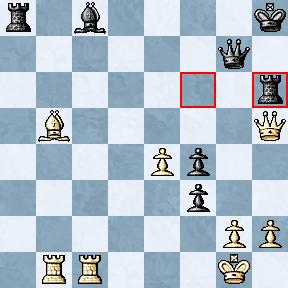
This is from a recent correspondence game on Chess.com. I was Black. White has just played 43. Ke4-f5.


43...Re6!?

I played this only to stop Kg6 and to protect my h6 pawn. Who could have guessed that the White King is now caught in a mating net? It is very difficult to free himself.

44. Rd2 Rc8!

Threatening Rc5+

45. Rd5

Stops Rc5+ but Black finds another way in.

45...Rc4!

Now Rf4# is very hard to stop. If 46. Rd4, then 46...Rc5+. White resigned.

Thursday, June 06, 2013

En Passant Checkmate

Tonight I executed a checkmate by En Passant at the g/20 tournament at Carls Jr.
Here was the position.


White to move. I played 20. e5+
Black's only move is 20...f5
and then...
21. exf6# 1-0

Wednesday, April 24, 2013

Need To Play Better

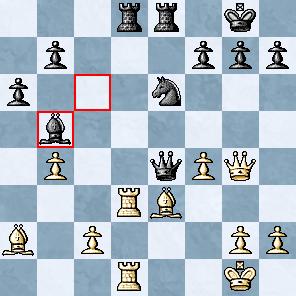
My chess reached a low point tonight when I got this position against a master. I was White.


White to play. I had 10 minutes, he had 5 minutes. I blacked out and played 18. Bxe7??  He bashed out 18...Qxd3+ and I resigned; it's mate in 2. A missed opportunity.

Sunday, March 17, 2013

Called the Tournament Director Over

I had a good tournament at Carl's Jr. last Wednesday. Twenty people showed up, nine rated over 1800. I scored 3.5/4 and tied for 1st place ($13 prize).  In Round 2, something peculiar happened.

Carl's Jr. G/20, Mesa, AZ, Mar. 13, 2013
Round 2
Randy (2008) - Joe (1905)


Black's last move was 36...Ba4-b5+. I had 20 seconds on my clock (3 second delay) and I did not see the check. I touched my rook on a2. Then I realized that I was in check. What would you do? Out of confusion, I stopped the clock and one of the observers called the tournament director. The ruling was that since I did not make an illegal move, the game would continue without penalty. 37. Kf3 Rc3+ 38. Kf4 Rc4+ 39. Kf3 Rc3+ draw agreed.

Next time this happens, I will move the rook back to a2 (since there is no legal move with that rook), play Kf3, and press the clock.

Thursday, March 07, 2013

Trapped my own piece

Here is a position from last night's game at Carl's Jr. (g/20), round 1.


I was White and it is White's move. White is up two pawns and about to win the pawn on a4. Instead of playing the simple Rxa4, I played 19. b3? d5! My bishop is lost. 20. Rxa4 dxc4 21. Rxa8 Qd5! 22. f3 Bxa8 23. bxc4? Qd4+ 24. Kf1 Qxa1+ 25. Ke2 0-1

Lessons to be Learned:
1. Do not relax when up two pawns. Need to be alert for opponent's tactics
2. Need to anticipate Qd5 and Qd4+. Those moves surprised me during the game.
3. Need better board vision

Tuesday, November 27, 2012

Opening Preparation

My win in Round 4 of the Phoenix Open was due to opening preparation. Here is the story. Back in September 2001, I played in the Universal Swiss in Warren, Michigan. In Round 2, I was paired against a master and this is how the game went

Aleksandar Stamnov (2244) - Randy Ho (1874)
1. e4 c5 2. c3 d5 3. exd5 Qxd5 4. d4 Nc6 5. Nf3 cxd4 6. cxd4 e5 7. Nc3 Bb4 8. Be2 e4 9. O-O Bxc3 10. bxc3 exf3 11. Bxf3


11...Qd6 12. Qa4 Bd7 13. Ba3 Qc7 14. Rfe1+ Kd8 15. Qc4 Nh6 16. Qd5 Qa5 17. Bc5 Rc8 18. Be7+ 1-0

During the game, I thought that my high-rated opponent had blundered a piece. After the game, he told me that it is theory. This game made a strong impression on me and I kept it in my memory. Fast-forward eleven years.

Phoenix Open, Scottsdale, AZ
Nov 24, 2012
Round 4
R. Ho (2061) - S. Pennock (1924)

1. e4 c5 2. c3 d5 3. exd5 Qxd5 4. d4 cxd4 5. cxd4 Nc6 6. Nf3 e5 7. Nc3 Bb4

I had a choice. Do I play the usual 8. Bd2 or the risky 8. Be2? After thinking for a few minutes, I chose Be2. Why? Because I remember the tremendous pressure I was under when I was playing Black eleven years earlier.

8. Be2 e4 9. O-O Bxc3 10. bxc3 exf3 11. Bxf3 Qd6

I did not remember exactly how the previous game went, but I did remember the moves Re1, Qa4, and Ba3.

12. Re1+ Nge7 13. Qa4 O-O 14. Ba3 Qd8

After this move, White wins the piece back and has the better position.

15. d5 Nxd5


I intended to play 16. Rad1, but when we got to this position, I noticed that 16. Bxd5 was stronger. The reason is because of the line 16...Qxd5 17. Bxf8 Kxf8? 18. Qa3+ mates.

16. Bxd5 Qxd5 17. Bxf8 b5 18. Qa3 Bb7 19. Qc5 Qxc5 20. Bxc5 Rc8 21. Rad1 1-0

Wednesday, November 14, 2012

Allowed a Queen Sac

Carls Jr G/20, Mesa, AZ, Nov 14, 2012
Round 4
Matthew (1914) - Randy (2037)

This game was in the last round and was for 1st place. I had 3/3 and my opponent had 2.5/3.

1. e4 d6 2. d4 Nf6 3. Bd3 e5 4. Nf3 Nc6 5. c3 g6 6. Bg5 Bg7 7. O-O O-O 8. h3 Qe8 9. Re1 h6 10. Bd2 Nh5 11. Qc1 Kh7 12. Na3 f5 13. exf5 gxf5 14. Nb5 

14...Qf7 is a sensible move, defending the c7 pawn. Unfortunately, I went crazy here. I thought that I would get enough compensation for the rook.

14...Qg6? 15. Nxc7 e4 16. Nh4 Qf6 17. Nxa8 Qxh4 18. Be2 e3?! 19. Bxe3 f4 20. Bxh5 fxe3 21. Qxe3 Qxh5 22. Nc7 Rf7 23. Ne8 


In this difficult position, I made a blunder.

23...Re7? 24. Qxe7 Nxe7 25. Rxe7 1-0

Lessons from the Game:
  • I need to have better board vision. 
  • I need to stop going crazy.

Wednesday, September 05, 2012

A Faulty Pin

Carls Jr. G/20, Mesa, AZ, Sept 5, 2012
Round 3
Miguel (2137) - Randy (2008)

I decided to play the Najdorf and I actually got a decent position. However, when the position got complicated, I cracked under the pressure.

1. e4 c5 2. Nf3 d6 3. d4 cxd4 4. Nxd4 Nf6 5. Nc3 a6 6. Be3 Ng4 7. Bg5 h6 8. Bh4 g5 9. Bg3 Bg7 10. Be2 h5 11. h4 Nc6 12. Nf5 Bxf5 13. exf5 Qa5 14. Qd2 Qxf5 15. hxg5 Be5 16. Bh4 Bd4 17. O-O-O O-O-O 18. Kb1 Qa5 19. Ne4 Qe5 20. f3 Ne3 21. c3 


This move came as a surprise and for some reason, I only considered Bc5 and not Bb6 or Ba7. My game went downhill in the next few moves.

21...Bc5 22. Bg3 Qf5 23. Bd3 Qe6 24. Rde1 Bb6 25. Rxe3 Bxe3 26. Qxe3 d5 


I thought that by playing d6-d5, I would win back material since the Knight is pinned, but I was in for a nasty surprise.

27. Qb6! 

Not only saving the Knight due to the threat of Qc7#, but I saw that after Rd7 or Qd7 comes Nc5!

27...Ne5 28. Qxe6+ fxe6 29. Bxe5 dxe4 30. Bxh8 exd3 31. Bd4 1-0

Lessons from the Game:
  • I need to handle complicated positions better. 
  • Stop cracking under pressure

Crushed in 13 moves

Carl's Jr. G/20, Mesa, AZ, Sept. 5, 2012
Round 2
Randy (2008) - Lance (1984)

1. e4 e5 2. Nf3 Nf6 3. Nc3 Nc6 4. d4 Bb4 5. Nxe5 O-O 6. Qd3 d5 7. Bd2?

I wanted to prepare to castle queenside, but I suppose I needed to resolve the situation in the center first.

7...dxe4 8. Nxe4 Nxe4 9. Qxe4

9. Bxb4 was better, but I didn't even consider it. After the game, we were looking at 9...Nxb4 10. Qxe4 Nxc2+!? 11. Qxc2 Qxd4. Black sacs a piece for pressure. I think the sac is dubious, but Lance likes it.

9...Bxd2+ 10. Kxd2 Nxd4 11. Bd3 Bf5 12. Qf4 Qd6

White to Play

Here, I calculated 13. Bxf5 Nxf5+ 14. Nd3 blocking the check and protecting my Queen. I was so excited to see this line that I missed 13...Ne6 winning the Queen.

13. Bxf5?? Ne6+ 0-1

Lessons from the Game:
  • I need to have better board vision

Saturday, September 13, 2008

Round 4

K. Musil - R. Ho
Valley Chess Sept Open (4)
Coffee Buzz, Ahwatukee, 9/9/08

1. d4 Nf6 2. Bg5

The Trompowsky Opening. A good choice, because I was not familiar with the lines.

2...c5 3. c3 Qb6 4. Qb3

Already on move 4, I had to make a big decision that would determine the character of the game.  I had to choose between cxd4, Qxb3, Nc6,  Ne4, or maybe something else? Unfortunately, all moves looked the same to me, so I chose one at random.

4...Nc6 5. e3 d6

I should have considered 5...Ne4 6. Bf4 g5 7. Bg3, which looks better than what happened in the game.

6. Nf3 Be6

Not a bad move -- It develops with tempo, but I later regretted placing the Bishop here.

7. Qa3

This move surprised me. I was expecting 7. Qxb6. The Queen looks awkward on a3, but Black has no effective way to exploit it.


7...Bf5

I had some trouble finding the right squares for my pieces. How to develop my dark square Bishop? 7...g6 is probably met by Bxf6, weakening the d6-pawn. Or 7...h6 8. Bf4 g5 followed by Bg7, and it's psychologically hard for Black to castle kingside. In the end, I opted for Bf5, e6, Be7, although in this plan, White can still play Bxf6.

8. Nbd2 

A fine move. The Knight is heading to c4.

8...cxd4 9. Bxf6!?

A zwischenzug! Apparently my opponent did not want me to play ...Ne4.
Here, I spent five minutes on 9...dxe3 trying to make it work. During the game, I saw 9...dxe3 10. Nc4 exf2+ 11. Kd1, and Black's initiative is gone. When I couldn't see a way to continue the "attack", I gave up. When I put this position in Rybka, it prefers Black. 11...Qc7 12. Bh4 d5 13. Ne3 Be4 14. Bxf2 Qf4, and I guess Black's piece activity and two pawns more than enough compensation for the piece. Although a famous international master once said that a piece is worth nine pawns.

Anaylsis Diagram - after 14...Qf4

9...gxf6 10. Nxd4 

The second moment (the first one was on move 4) where I had to make a big decision. These kinds of positions demand a good understanding of chess as opposed to calculating ability. Should I play Nxd4 or Bd7? 

10...Bd7? Following the rule of Never Trade, but moving backwards is passive.

11. Nc4 Qc7 12. Nb5 Qb8?

Here, I let my guard down. It was psychologically difficult for me to play Qd8, returning the Queen to its original square. Also, with Qb8, the d6-square is protected for a third time. So I played Qb8 automatically and quickly.

13. Be2?

White had a tactical shot 13. Nb6! winning the Exchange.

13...Ne5?

It was not too late to play 13...Qd8.


14. Nb6!

White sees it the second time around. One interesting point is that 14...Bxb5 is met by 15. Bxb5 CHECK.

14...axb6 15. Qxa8 Qxa8 16. Nc7+ Kd8 17. Nxa8 Bc6

The idea was that if White takes time to defend g2, then I can play ...Nd7 (protecting b6) and try to win the Knight in the corner.

18. Nxb6 Bxg2 19. Rg1 Nf3+

Hoping that my Bishop pair would be an asset.

20. Bxf3 Bxf3 21. Rg3 Bh5 22. Nd5!

Making it difficult for Black to free himself.

22...Kd7 23. a4 Bg6 24. a5 Kc6 25. Nf4 e5 26. Nxg6 hxg6 27. h3 Be7

I was in a hurry to activate my rook. Better was 27...d5, giving my Bishop more scope.

28. e4 Ra8 29. c4 Kc5

I played this before White could play b4 and lock my King in.

30. Rb3 Ra7 31. Ra4.

It is funny that Rybka suggests 31. O-O-O!

31...Bd8 32. Rba3 Kd4 33. f3 Kc5 34. Ke2 Ra8 35. Kd3 f5 36. b4+ Kc6 37. Ra1 Bg5 38. exf5 gxf5 39. Rg1 Bf6 40. Rh1


40...b5 

An attempt to confuse the issue. 

41. cxb5+ Kxb5

Here my opponent almost played 42. Rha1. I would have played 42...e4+ discover attack on his rook. (Rybka says 42...d5 is stronger (=), but I don't get it)

42. Ra2 Kxb4 43. Rb1+ Kc5 44. Rb7 Kd5 

Seeing no good way to protect f7 (Rf8 was out of the question), I decided to play actively.

45. Rb5+ Kc6 46. Rb6+ Kd5 47. a6 e4+ 48. fxe4? 

Apparently 48. Ke2 is much better.

48...fxe4+ 49. Ke2.

Of course, not 49. Ke3?? Bd4+

49...Bd4 50. Ra5+ 


50...Ke6??

It is a pity that I fought hard being down the Exchange to get a playable position (okay, maybe it's still lost), only to blunder badly in time trouble. 50...Bc5 was better.

51. Rb4!

Black loses the e4 pawn here. Both players were blitzing out their moves. Eventually, Black had two connected pawns, and White had a Rook. Black seemed to be holding the position together for dozens of moves, but then White found the key move:


In a position similar to this, White played Re8!. In order to save the e-pawn, Black has to play ...e3 allowing Kd3, or ...d3 allowing Ke3, winning in both cases. Black lost both pawns and played until checkmate.

1-0

Wednesday, September 10, 2008

Rounds 3 and 4

Last night my opponents got tougher. I drew a 1700 and lost to a 1800.  Here is a position from one of my games.


White to Play

Tuesday, September 02, 2008

Back to Chess


Today I played in the Valley Chess September Open. It is ten rounds -- two games every Tuesday night in September. Tonight was rounds 1 and 2. There are several reasons that I played.

1. The time control is G/60 rather than the usual G/30,
2. The location (Coffee Buzz) is close to where I live, and
3. Playing chess is good therapy for my brain.

For the first time in my life, I didn't get into any time trouble! I am very proud of myself for this. 

Stay tuned for annotated games.

Sunday, December 23, 2007

An Accidental Checkmate


I was playing a 5-minute game on ICC tonight. I had a winning endgame, but the problem was that I was down to 1 second on my clock (Yeah I know, I need to move faster), and my opponent had almost two minutes. No problem, I thought. I will just promote my pawn to a Queen and sacrifice it for the pawn on g6 and get a draw.

In the picture above, I have just played 57. a7, and I premoved 58. a8=Q. When my opponent played 57...Ne6???, my BlitzIn made a DING sound to indicate the game was over. Turns out that 58. a8=Q was checkmate.

Wednesday, October 03, 2007

Oops

Oops, it appears that my USCF membership has expired :(
Since I was rarely playing in any chess tournaments anyway (Valley Chess once every three months is not very frequent), I don't have a strong motivation to renew. So I am temporarily retired from tournament chess. I will still continue to play on ICC though. My handle there is Googly.

Wednesday, August 22, 2007

Congratulations to Joel Johnson

...for winning the United States Senior, which ended recently. I know Joel from Valley Chess (I play there once every three months).

Monday, December 18, 2006

Valley Chess Championship


The Valley Chess Championship ended yesterday. The tournament was a ten-round Swiss, held over five weeks. Time control was G/30.

Final Standings
1 Joel Johnson 10-0
2-3 Pete Karagianis, Randy Ho 6-4
4-5 James Beauregard, Richard Smouse 5.5-4.5
Total 18 Players

Official Crosstable

----------------------

In Round 1, I was White against Andrew Kelly. I think that I misplayed the opening just a little.


White is pinned all over the place. I got lucky, because Black blundered with 13...Nd4? which allowed 14. Nxe5. I think that if Black had played f6 first to protect that pawn, then Nd4 would have been very crushing. After that blunder, my position freed itself up and I eventually won.

In Round 2, I was Black against Joel Johnson.


For the last 15-20 moves, I felt uncomfortable pressure. If I ever want to be good at chess, I need to learn to defend these types of positions. The patzer inside me revealed itself when I lashed out irrationally with 37...Bxe5?? 38. fxe5 Qxe5, and White won quickly.

In Rounds 3 and 4, I took Half-Point Byes, because Ben was visiting Phoenix that weekend.

In Round 5, I was White against Alexis McKenzie.


In this position, I won material with 18. Na5, and I eventually won.

In Round 6, I played Joel Johnson again, this time with White.


I played the interesting move 31. g4!? Jenny would approve. But I did not follow through properly. Joel played 31...Bg5. Now I should have played 32. gxf5 here, instead I played 32. Bxg5 and I eventually lost on time. Pete was very interested in this position. After the game, he was trying to find a win for White.

In Round 7, I was Black against Dan Marsalone. I played a Sicilian Dragon against him.


The game continued 25...f3 26. Bxf3 Bxf3 27. gxf3 and White lost on time. I think that I would have played 27...Qg5+ winning the Rook on d2.

In Round 8, I was Black against Pete Karagianis.


I was getting squeezed, but this time I tried not to do anything rash, like I did in Round 2. In this position, I saw a glimmer of hope and played 27...Nxd5 winning a Pawn. The game continued 28. exd5 Bxd3. But then I made a few inaccurate moves and soon found myself in ZugZwang and lost. 29. Qd7 Bb5 30. Qg4 Notice how White's Rook and Queen prevent Black's Rook and Queen from activating.

I showed up four minutes late to Round 9, and Tournament Director Joel had already made the pairings. He decided to give me a Full Point Bye instead of redoing the pairings.

In Round 10, I was Black against Josh Zhu. I found myself in slight difficulties after move 16.


My d-Pawn is about to fall. What can Black do? I felt that 16...d5 was my only chance, so that's what I played, without calculating everything till the end. That move turned out well for me, because I soon got the type of position that I am comfortable in. Eleven moves later, I had the following position.


I think that Black wins material here. The game continued 28. Rxd8 Qxe3+ 29. Kh1 Nxd8, Black has won a piece. Then a weird thing happened after I was trying to checkmate him with a Queen and Bishop. It was the second time in my USCF career that I moved my Queen to a square where it could be taken for free. Fortunately, I was still winning after I hung my Queen, so I won.

Sunday, November 19, 2006

Ben Finegold Visit Day 2

In the semi-finals of the blindfold knockout tournament, Ben was Black against Sonny Kamberi. Unfortunately for Sonny, Sonny hung a Bishop in the middlegame and resigned. Sonny forgot that Ben had a Queen on b6.

Then, in the finals, Ben had White against GM Jaan Ehlvest.


As you can tell from the picture, the opening was a King's Indian. Also notice that the game was being played outdoors and the kids were wearing T-shirts. Wow, it is nice and warm in Arizona in November.

Ben was doing very well, but then............


In this position, all Ben had to do was play Qxf3 and he would have been two pawns up with no compensation for Black, an easy win for someone of Ben's caliber........

However, Ben hallucinated. He saw a quicker win and went for it. He played Qe8+ Kh7 and now, Rc7?? supposedly pinning and winning the Queen. Apparently, Ben thought that his Queen was on d8, not e8, and realized his mistake right after he moved. The game continued Qxc7 Bc6 Qa7+ Resigns.